
Few plants do as much work for as little effort as ornamental grasses. They bring movement, texture, and height to a garden, they hold their good looks from summer straight through winter, and once established, most of them ask almost nothing of you. That combination has made them one of the most popular perennials we sell.
There is a catch, though, and it trips up a lot of local gardeners. Much of the ornamental grass advice online is written for climates nothing like ours. A list built for a dry western garden can steer you toward the wrong plants for the heavy soil and wet winters of the Chicago suburbs. Here is how to choose grasses that actually thrive in Northern Illinois, plus the ones worth avoiding.
What Zone 5 Really Means for Northern Illinois Gardens
USDA hardiness zones are useful, but they only tell you one thing: the average coldest winter temperature an area sees. The USDA Plant Hardiness Zone Map puts most of Northern Illinois in zone 5b, with warmer pockets nudging into 6a, which means our average winter low lands somewhere around minus 10 to minus 15 degrees. A grass rated hardy to zone 5 should survive that cold.
What the zone number does not tell you is everything else that matters to a plant. It says nothing about soil, rainfall, humidity, or snow. That is why a plant list labeled “zone 5” can be misleading. Northern Colorado’s Front Range is also zone 5, and a lot of popular grass guides are written for exactly that kind of place: high, dry, sandy, and sunny, where xeric plants rule. Our zone 5 is a different animal. We garden in heavy clay, humid summers, soggy springs, and winters that pile wet snow on top of everything. A grass has to handle our conditions, not just our winter low, and that is the lens we use when we recommend one.
Best Ornamental Grasses for Northern Illinois
The grasses that perform best here are the ones built for clay, cold, and moisture. Ornamental grasses fall into two broad groups. Cool-season grasses green up early in spring and can fade in summer heat, while warm-season grasses wait for warm soil, then hit their stride in late summer and carry gorgeous bronze and burgundy tones into winter. Most of our reliable performers are warm-season types.
A few we recommend again and again, all available in our perennials collection:
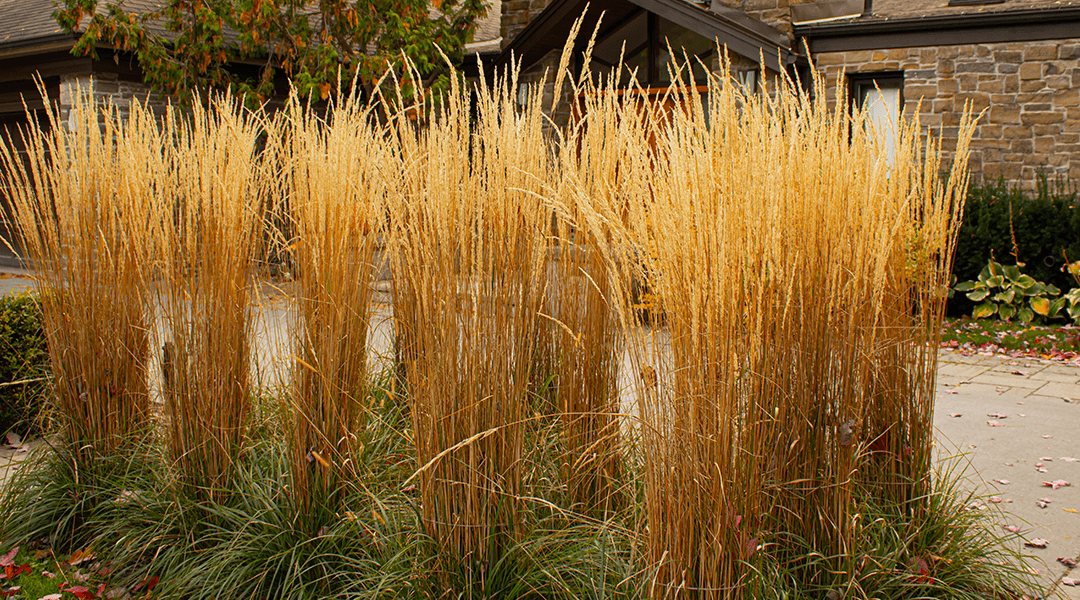
- Feather reed grass, especially the classic ‘Karl Foerster’. It is upright, tidy, tolerant of clay, and one of the most dependable grasses you can plant in the Midwest.
- Switchgrass, a tough native that shrugs off clay and comes in strong upright forms like ‘Northwind’ and reddish selections like ‘Shenandoah’.
- Little bluestem, a compact native that turns brilliant copper and red in fall and holds that color into winter.
- Japanese silver grass, a robust clumping grass in a wide range of cultivars. University of Illinois Extension singles out ‘Autumn Light’ and ‘November Sunset’ as especially good performers in our climate.
- Prairie dropseed, a fine-textured native with a soft, fountain-like habit and a light fragrance in bloom.
Match the mature size to your space, give most of them full sun, and these will anchor a bed for years.
Native Grasses That Belong in Local Gardens
Some of the best choices for a Northern Illinois garden grew here long before any of us did. Little bluestem, big bluestem, switchgrass, prairie dropseed, and Northern sea oats are all native or regionally at home, and they carry advantages that imported ornamentals cannot match.
Because they evolved in our prairies, natives handle our clay soil, temperature swings, and rainfall patterns without fuss. Just as important, they support the local ecosystem. Their seed heads feed birds through winter, and their standing foliage gives beneficial insects a place to overwinter. If you are already building a habitat-friendly yard, grasses pair naturally with the plants in our pollinator perennial collection, adding structure and movement between the flowers.
Illinois Extension makes a nice point about why grasses read so differently from the rest of the border. They bring natural motion and sound to a space, turning a static foundation planting into something that shifts with the wind. That living quality is a big part of their appeal, and native grasses deliver it while doing ecological work at the same time.
Grasses to Skip: Invasive or Not Truly Hardy
Just as useful as knowing what to plant is knowing what to leave at the store. A few grasses show up on generic zone 5 lists that do not belong in a Northern Illinois garden.
Pampas grass is the most common mistake. Those dramatic white plumes look tempting, but true pampas grass is not reliably hardy much north of zone 7, so it will not survive our winters in the ground. If you love that look, a hardy plume grass or a tall Miscanthus gives you a similar effect that will actually come back.
Purple fountain grass is another one to understand before you buy. It is a beautiful burgundy grass, and it is genuinely worth growing, but in our climate it is an annual. Plan to enjoy it for one season and replace it, rather than expecting it to return.
Then there are the spreaders. University of Illinois Extension specifically flags blue lyme grass, cordgrass, and reed canary grass as aggressive plants that can take over a bed or escape into natural areas. Avoid those entirely. Even with well-behaved favorites like Japanese silver grass, it is smart to choose named clump-forming cultivars, which stay put far better than seed-grown plants.
Full Sun, Clay, and Snow: Matching Site to Grass
The right grass in the wrong spot will disappoint you, so match the plant to the site before you plant.
Start with sun. The great majority of ornamental grasses want full sun, meaning at least six hours of direct light. In too much shade, they flop, thin out, and lose their color. If you are working with a shadier spot, you have options, but fewer of them. Hakone grass and Northern sea oats both handle part shade, and you will find more shade-friendly, grass-like choices in our shade plant collection.
Then deal with our clay. Heavy soil holds water, and a grass sitting in soggy ground over winter can rot at the crown. Loosen the planting area, work in some compost to improve drainage, and set each plant no deeper than it grew in its pot. Planting too deep is a common way to lose an otherwise hardy grass. Most of the natives on this list tolerate clay well once established.
Finally, think about snow. Tall grasses left standing can flop under a heavy wet snow, which is one reason upright, sturdy cultivars like ‘Karl Foerster’ and ‘Northwind’ are so popular here. Keep your fertility low too. Too much nitrogen makes grasses grow soft and lean over, so a light hand is better than a heavy one.
One more thing determines whether a grass ever gets the chance to prove itself: water in that first year. A newly planted grass needs consistent moisture through its first full growing season to build the deep root system that makes it so tough later on. Water it regularly the first summer, and after that most of these grasses will get by on rainfall alone except during a serious drought. That first-season investment is the difference between a plant that merely survives and one that thrives for a decade.
When to Cut Back Ornamental Grasses in Zone 5
This is the question we hear most, and the answer is good news because it means less work in fall. Do not cut your ornamental grasses back before winter. Leave them standing.
University of Illinois Extension is clear on this: grasses do not need to be cut down before winter, they are attractive left standing, and the old foliage actually helps insulate the crown of the plant through the cold. On top of that, the winter form is one of the best reasons to grow grasses in the first place. Frosted plumes and tan blades catching low winter light give the garden something to look at when everything else has gone dormant, and the seed heads keep feeding birds.
Cut them back in early spring instead, before new growth resumes, trimming warm-season grasses down to about four to six inches. Timing matters on the back end: if you leave the old foliage on too long once spring arrives, it can delay the crown from warming up and push back new growth by as much as three weeks. A practical trick is to tie the clump into a bundle with twine first, then cut below the tie with hedge shears or a powered trimmer, so the whole thing comes off in one neat armful.
Using Grasses in Fall Containers and Beds
Grasses are not just for the landscape. Their height and texture make them ideal thrillers in a mixed container, which is why our designers reach for them every autumn. In fact, several of the recipes in our fall planters use Japanese blood grass as the centerpiece, and our full guide to fall container gardening in zone 5 walks through how to build those arrangements. A grass in the center, cool-season color around it, and something trailing over the edge is a combination that holds up beautifully into late fall.
In the ground, grasses shine in numbers. A mass planting of little bluestem or switchgrass creates movement and a soft screen, while a single specimen grass can anchor a corner or soften a hard edge. They also pair naturally with late-season perennials, echoing the seed heads of coneflowers, the color of asters, and the rust tones of sedum as the garden winds down for the year.
Where to See Grasses Growing in Chicagoland
The best way to choose an ornamental grass is to see it grown up and in context, so you know how big it really gets and how it moves. Stop by one of our garden centers in Carpentersville, Bloomingdale, or Rockford to walk the grasses in person, and bring a photo of your space if you would like help matching a plant to your sun, soil, and scale.
If you are planning a larger planting or want grasses worked into a full landscape design, our design and installation team can help you place them for year-round interest.