
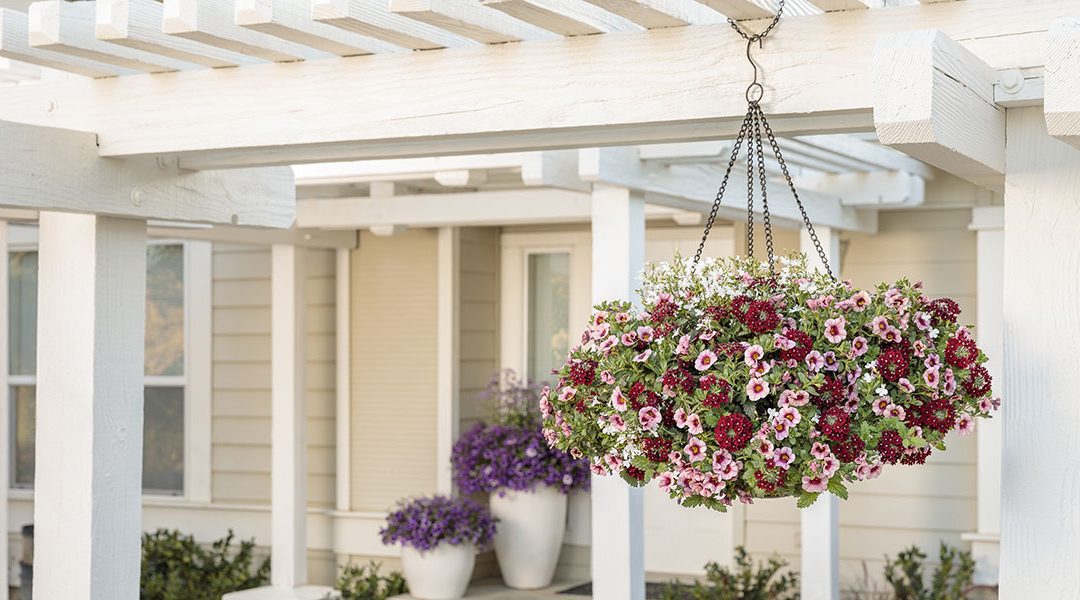
Few garden purchases deliver more instant color than a hanging basket. The challenge is that many baskets look incredible in May and disappointing by July.
What begins as a lush display of flowers can quickly become sparse, wilted, or overgrown as summer heat, changing light conditions, and inconsistent watering take their toll. In many cases, the problem isn’t a lack of effort. The plants simply weren’t matched to the location, conditions, or level of maintenance the basket would require throughout the season.
The truth is, certain plants consistently perform better in Northern Illinois than others, whether they’re growing in full sun on an exposed patio or brightening a shaded front porch. And understanding how light, heat, watering needs, and growth habits affect performance can make the difference between a basket that peaks in spring and one that remains attractive into fall.
What Makes a Plant Great for Hanging Baskets
Not every flowering plant thrives in a container suspended several feet above the ground.
The best hanging basket plants typically share a few important characteristics:
Continuous blooming
A basket occupies a prominent spot on a porch, patio, or entryway. Plants that bloom consistently throughout summer provide more value than those with a short flowering period.
Trailing or mounding growth
Plants that spill over the sides create the full, lush appearance most gardeners want from a hanging basket.
Heat tolerance
July and August in Northern Illinois can bring intense sun, humidity, and windy conditions that dry containers quickly. Plants that tolerate heat and occasional stress tend to look better later in the season.
Strong recovery ability
Even attentive gardeners occasionally miss a watering. Some plants bounce back quickly while others never fully recover.
Good container performance
A plant may be beautiful in a landscape bed but struggle in the limited soil volume of a hanging basket.
When comparing options, think beyond how the basket looks on the day you buy it. Consider how it will perform after two months of summer weather.
How to Read the Light in Your Home Before You Buy
One of the most common reasons hanging baskets fail is that homeowners overestimate or underestimate their sunlight.
Before choosing a basket, spend a day observing the area where it will hang.
Full sun
Find the areas around your home that receive at least 6 hours of direct sunlight daily.
Common examples:
- South-facing porches
- Open patios
- Shepherd’s hooks in the yard
- Areas without nearby trees
Part sun or part shade
Look for spots that receive approximately 3 to 6 hours of direct sunlight.
Common examples:
- East-facing porches
- Locations with morning sun and afternoon shade
- Areas filtered by mature trees
Shade
A shaded area will receive less than 3 hours of direct sunlight.
Common examples:
- Covered front porches
- North-facing entrances
- Deeply shaded patios
- Spaces beneath large trees
A Northern Illinois Reality Check
A west-facing location can be far more demanding than many gardeners expect. Afternoon summer sun reflecting off siding, concrete, or brick often creates hotter conditions than the plant tag suggests.
Likewise, a covered porch may qualify as shade even if the surrounding yard is sunny.
When in doubt, choose plants based on the actual light where the basket hangs, and not the light elsewhere in your yard.
Best Hanging Basket Plants for Full Sun in Northern Illinois
These plants perform especially well in locations that receive strong sunlight throughout the day.
Petunias
Petunias remain one of the most reliable choices for large, colorful displays.
Why gardeners love them:
- Continuous blooms
- Wide color selection
- Fast growth
- Excellent trailing habit
Best for:
- Sunny porches
- Patio hooks
- Front entrances
Calibrachoa (Million Bells)
Another option is the calibrachoa. It offers petunia-like flowers with the added benefit of being a smaller, self-cleaning plant.
Advantages:
- Little to no deadheading
- Heavy bloom production
- Excellent trailing growth
- Long season of color
Best for:
- Gardeners seeking lower-maintenance baskets
Verbena
Verbena tolerates heat exceptionally well and continues flowering through summer.
Advantages:
- Drought tolerance
- Strong summer performance
- Pollinator appeal
Best for:
- Hot, exposed locations
Scaevola (Fan Flower)
Scaevola is often overlooked but performs impressively during Midwest summers.
Advantages:
- Handles heat and humidity
- Consistent flowering
- Good drought tolerance
Best for:
- Challenging sunny locations
Sweet Potato Vine
While grown primarily for foliage, sweet potato vine adds dramatic texture and trailing growth.
Advantages:
- Fast growth
- Excellent filler plant
- Attractive foliage colors
Best paired with:
- Petunias
- Calibrachoa
- Verbena
Best Hanging Basket Plants for Part Sun
Part-sun locations are often the easiest places to grow attractive baskets because plants receive enough light to bloom without enduring the harshest afternoon heat.
New Guinea Impatiens
Unlike traditional impatiens, New Guinea varieties tolerate more sun while producing large, colorful flowers.
Advantages:
- Long bloom season
- Attractive foliage
- Good performance in morning sun
Begonias
Begonias are among the most dependable basket plants for Northern Illinois.
Advantages:
- Excellent heat tolerance
- Continuous blooms
- Lower water demands than many flowering annuals
Best for:
- East-facing porches
- Morning sun locations
Bacopa
Bacopa creates a soft cascading effect with hundreds of small blooms.
Advantages:
- Elegant appearance
- Excellent spiller plant
- Works well in mixed baskets
Lobelia
Lobelia performs best before peak summer heat but provides beautiful early-season color.
Advantages:
- Blue flowers uncommon in many baskets
- Excellent trailing habit
Best used as:
- A companion plant in mixed arrangements
Best Hanging Basket Plants for Shade in Northern Illinois
Shade does not mean settling for less color.
Several plants perform beautifully on covered porches and other low-light locations.
Fuchsia
Fuchsia remains a favorite for shaded hanging baskets.
Advantages:
- Unique flowers
- Hummingbird attraction
- Elegant trailing habit
Best for:
- Covered porches
- Protected entrances
Traditional Impatiens
Impatiens continue to be among the best flowering plants for deep shade.
Advantages:
- Heavy bloom production
- Reliable flowering in low light
- Easy care
Best for:
- North-facing porches
- Areas with limited direct sun
Tuberous Begonias
For gardeners seeking larger flowers, tuberous begonias offer exceptional performance in shade.
Advantages:
- Large blooms
- Long flowering season
- Excellent basket habit
Ivy and Trailing Foliage Plants
Not every shade basket needs to rely entirely on flowers.
Trailing foliage plants can add texture and visual interest throughout the season.
Examples include:
- English ivy
- Dichondra
- Creeping Jenny (Lysimachia)
Mixed Hanging Basket Combinations That Work in Chicagoland
The most attractive baskets often combine multiple plant types.
A simple design formula is:
Thriller + Filler + Spiller
Sunny basket combination
- Petunia
- Calibrachoa
- Sweet potato vine
This combination provides season-long color with dramatic trailing growth.
Part-sun basket combination
- New Guinea impatiens
- Bacopa
- Sweet potato vine
This blend offers flowers, texture, and strong summer performance.
Shade basket combination
- Fuchsia
- Begonia
- Ivy
Ideal for covered porches and shaded entrances.
When creating combinations, choose plants with similar light and water requirements.
When to Plant Hanging Baskets in the Chicago Suburbs
Timing matters in Northern Illinois.
Although garden centers are filled with annuals in spring, tender basket plants remain vulnerable to frost.
For most Chicago-area gardens, hanging baskets are safest outdoors after the average last frost date, which typically falls in early May.
If a late frost is forecast:
- Move baskets indoors overnight
- Place them in a garage
- Cover them temporarily
Many gardeners use Mother’s Day as their unofficial planting season kickoff, but keeping an eye on the weather remains important.
Watering and Care Through a Northern Illinois Summer
Most hanging basket problems trace back to watering.
A basket that thrives in May can become much more demanding by July as temperatures rise, plants grow larger, and roots compete for moisture in a limited amount of soil. It’s common for baskets to look great in spring, then suddenly begin wilting during hot weather. In many cases, the plant is healthy. It simply needs more water than it did earlier in the season.
Why Hanging Baskets Dry Out Quickly
Unlike plants growing in the ground, hanging baskets are exposed on all sides. Sun, wind, and heat pull moisture from the soil much faster, especially in coco-lined baskets that allow water to evaporate through the sides.
Location matters, too. A basket on a shaded porch will stay moist far longer than one hanging in full afternoon sun near concrete or brick.
Expect Watering Needs to Change
Watering schedules aren’t static. Many baskets only need water every few days in spring, but daily watering is often necessary by midsummer. During prolonged heat, some may need water twice a day.
Rather than following a strict schedule, check the soil regularly. If the top inch feels dry or the basket feels noticeably lighter, it’s time to water.
Keep Plants Blooming All Season
Consistent moisture is only part of the equation. Flowering annuals are heavy feeders, and regular fertilizing helps maintain healthy growth and continuous blooms throughout summer.
By late July, many baskets benefit from a light trim. Removing spent flowers and cutting back leggy growth encourages fresh foliage and a new flush of blooms heading into late summer and fall.
The best hanging baskets aren’t necessarily the lowest maintenance. They’re the ones matched to the amount of care you can realistically provide throughout the season.
Where to Buy Hanging Baskets in Chicagoland
The best hanging basket isn’t necessarily the one with the most flowers on the day you buy it, but the basket that’s still thriving on your porch in August.
Before you buy, look for healthy foliage, strong branching, and plants that match the amount of sunlight your space actually receives. A beautiful shade basket placed in full sun, or a sun-loving basket tucked onto a covered porch, is often the difference between months of color and weeks of frustration.
If you’re not sure what will work in your yard, bring a few photos of your porch, patio, balcony, or landscape. Knowing how much sunlight the area receives can help you choose plants that will perform well throughout the season.
At Platt Hill Nursery, our team helps gardeners across the Chicagoland area match hanging baskets to real-world growing conditions, whether you’re dealing with a sunny front entrance, a shaded porch, a windy deck, or a patio that bakes in afternoon sun.
Visit one of our garden centers in Carpentersville, Bloomingdale, or Rockford to explore our selection of hanging baskets, get personalized recommendations, and find the right plants for your home.